
Ollie’s Adventure
Meet Ollie: How One Crown Heights Border Collie Found What He Actually Needed
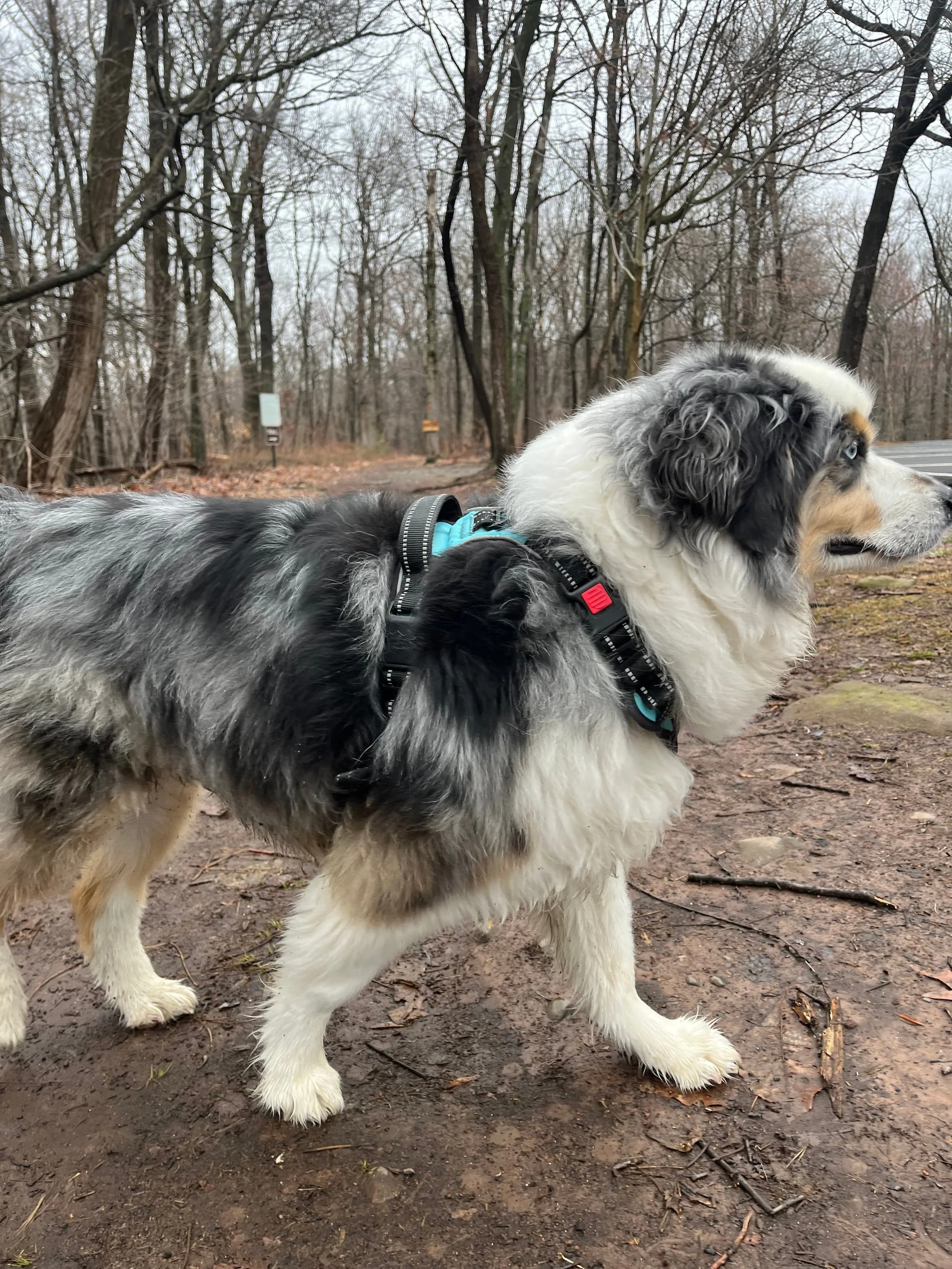
Most people think border collies need a good walk. Ollie's owner thought the same thing until she realized a 30-minute loop through Prospect Park was doing nothing but making her dog angrier.
"He was chewing sticks. A lot of sticks," she says. Not the occasional stick. We're talking destructive, compulsive stick-chewing. The kind where your dog comes inside with splinters in his gums and you start wondering if something's actually wrong with him.
The truth: nothing was wrong with Ollie. He just needed a real job.
Why Border Collies Are Different (And Why Most Dog Owners Get It Wrong)
Border collies were bred to work 12 hours a day. Not metaphorically. That's their baseline. Generations of selective breeding created a dog whose brain is wired to solve problems, make decisions, and burn mental energy constantly.
A walk doesn't do that. A dog park definitely doesn't do that.
When you take a border collie to a dog park, you're handing him a ball with no rules and 20 other dogs with no objective. His brain is designed to work. To problem-solve. To have a job where he thinks about what's next.
That's what the stick chewing was about. Ollie wasn't being destructive because he had a behavioral problem. He was being destructive because his brain was looking for a problem to solve, and a stick in the backyard was the only job available.
The Real Test: What Happens on the Trail
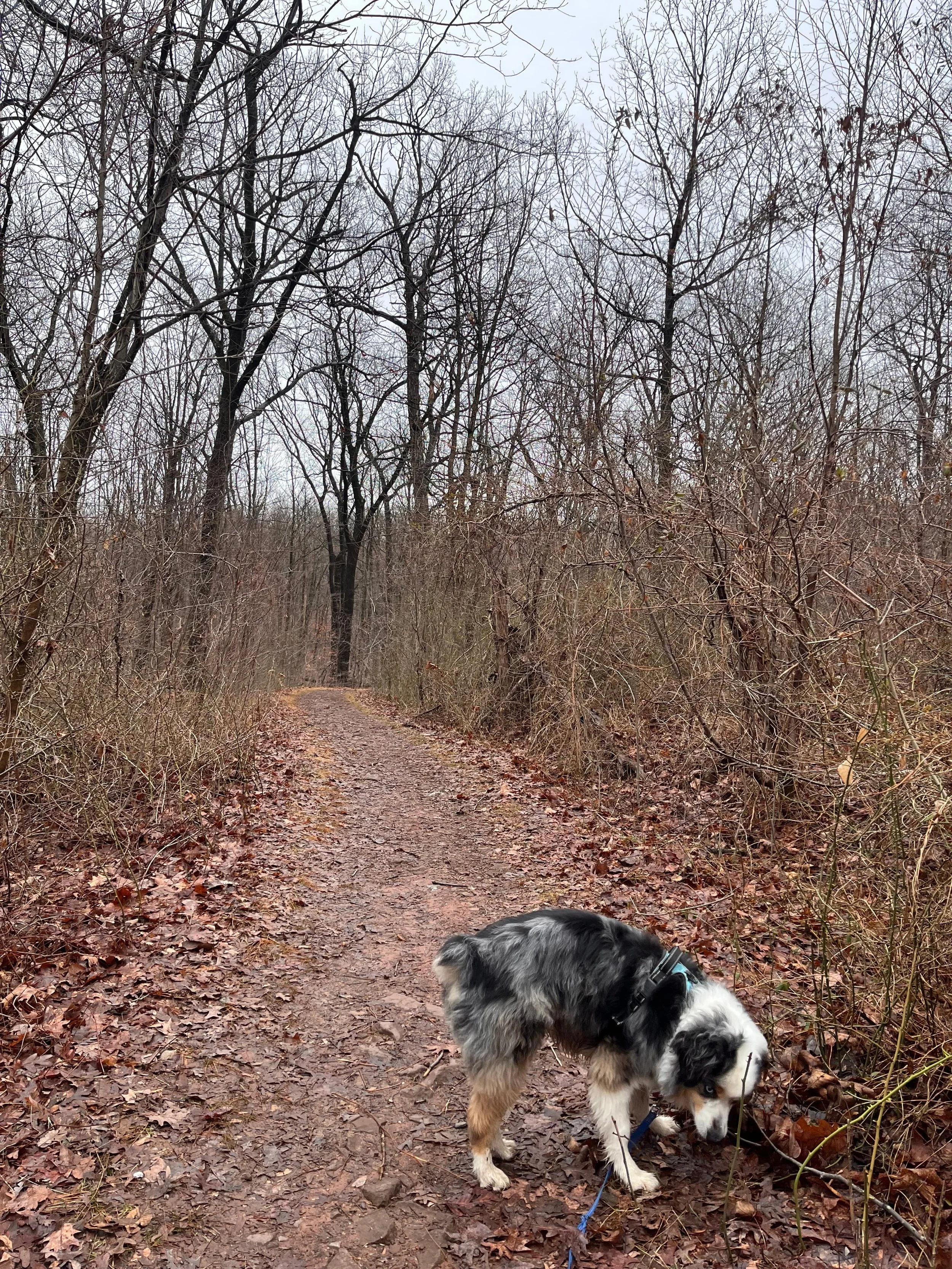
Here's what changed everything for Ollie: off-leash trail hiking.
Not because it was exercise. Any trail is exercise. But because off-leash hiking gives a working dog what he's actually wired for: autonomy, problem-solving, real terrain to navigate.
On the trail, Ollie isn't following a loop. He's deciding where to step. He's managing terrain. He's reading the forest and figuring out the best route. He's using his brain and his body together.
That something was purpose.
Beyond the 30-Minute Walk: What Real Mental Stimulation Actually Looks Like
Most dog owners measure success by distance or time. They think "I walked my dog for an hour, so today's exercise box is checked."
For a border collie, that's like saying you mentally stimulated yourself by sitting in traffic for an hour.
Off-leash trail hiking is different because:
Terrain forces decision-making. Ollie has to pick his footing. He has to read uneven ground. He has to adapt. That's cognition at work, not just movement.
Freedom creates responsibility. When a dog is off-leash, he's not following a predetermined path. He's making choices. Where do I sniff? How far do I go? What's safe? Those micro-decisions are what engage a working dog's mind.
The forest is complex. A marked dog park has boundaries and rules. A trail has variables: water, fallen trees, other dogs, weather, wildlife. A dog on a real trail is problem-solving constantly.
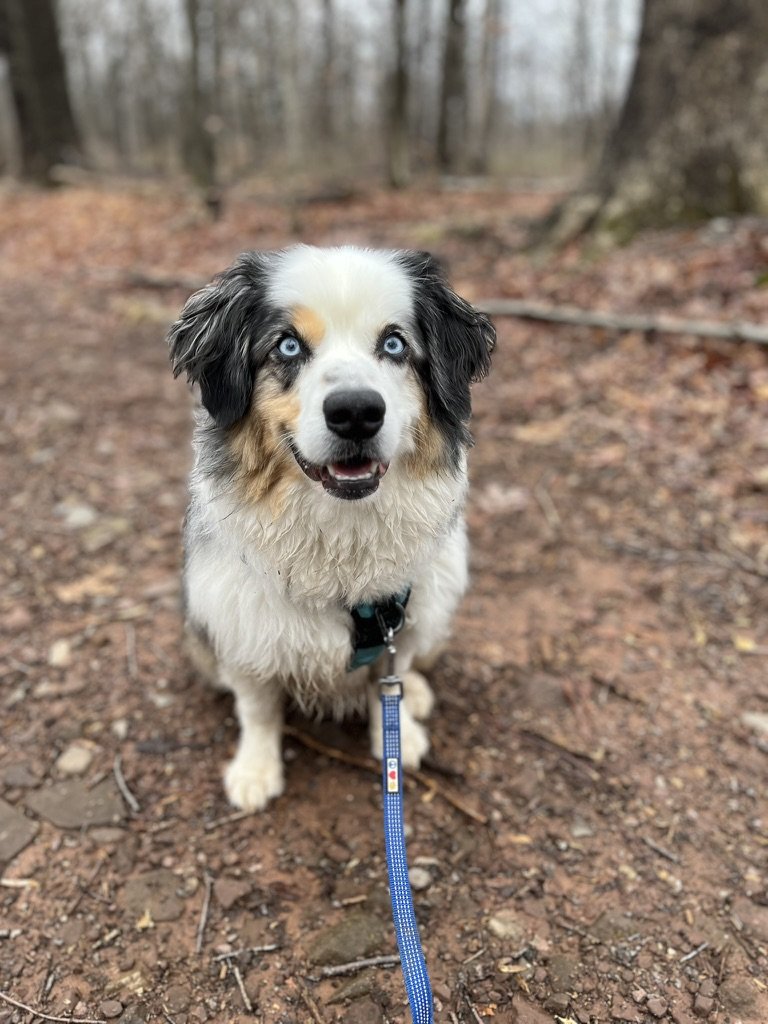
After a few hikes, Ollie's owner noticed something else: no more stick chewing. Not because she punished it. Not because she managed it. But because Ollie finally had a real outlet for what his brain was demanding.
How We Handle This at Concrete to Creek
This is why we're obsessed with off-leash hiking. It's not about the miles. It's about the opportunity.
When Ollie comes on a trail with us, we're not walking a dog. We're putting him in his element. We're giving him the closest thing to what his breed was created for. Not herding sheep in the hills, but problem-solving in real terrain with real stakes.
We've seen this pattern repeat with every working breed dog we take out. The stick chewing disappears. The door aggression settles. The constant whining stops.
Not because we fixed the dog. But because we gave the dog what the dog was asking for all along.
If your dog is showing signs of frustration (destructive behavior, compulsive chewing, aggression, anxiety), the answer usually isn't more training or stricter rules. It's the right outlet. For working breeds, that outlet is real terrain and real purpose.
Ready to See Your Dog's Transformation? Join the Pack