
The Best Off-Leash Dog Hiking Trails Near NYC: Where Your Dog Gets to Actually Run
Five specific off-leash trails within two hours of the five boroughs. Real terrain, real driving times, and what to actually bring. No parks that turn out to be on-leash. No vague "dog-friendly" listings.
NYC dog owners know the loop.
Prospect Park on Saturday morning. The usual block and a half before 8am. The same fire hydrant, the same dog they barely tolerate, the same stretch of sidewalk that smells exactly like it always smells.
Your dog knows the loop too. They can smell every inch of it. They've peed on most of it.
There's a version of your dog that city life doesn't often reach. The version that goes quiet in the forest, figures out a rocky scramble on their own, and then sleeps the whole drive home and half of Sunday. That dog exists. But they need something the city can't give them: real terrain, real distance, and time to actually settle into the experience.
The short version: A dog who has spent four hours navigating unfamiliar terrain, processing new smells, and making real decisions in a real environment settles differently than a dog who ran five miles on a leash. The brain is what needs the workout. These five trails give it one.
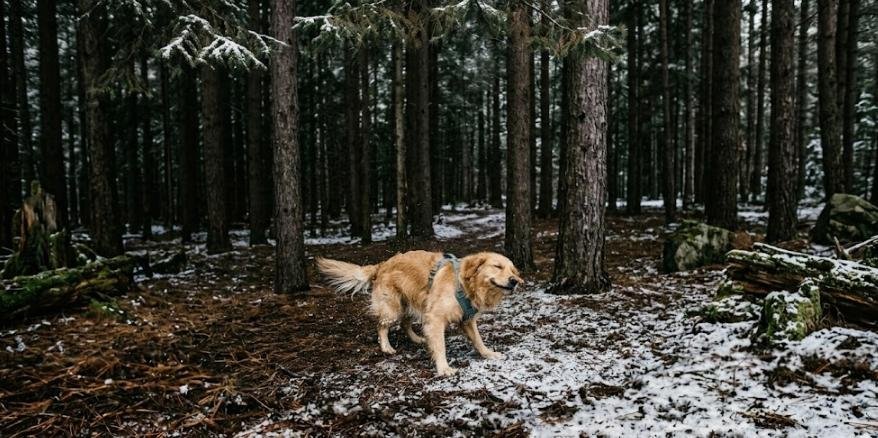
A dog actually tired, not just exercised. This is what four hours on a real trail looks like.
The Five Trails
Harriman State Park, NY
45 minutes from Midtown • Multiple trails, easy to strenuous
If you've never taken your dog to Harriman, start here. It's 47,000 acres in the Hudson Valley and off-leash hiking is permitted on most of its trails. For NYC dog owners, it's the best starting point for what real hiking can look like.
The Island Pond Trail is five miles, rated moderate, and the single best introduction to trail hiking for city dogs. The terrain shifts: packed dirt, rocky scrambles, some mild exposure. There's a pond at the midpoint where dogs can wade or swim. By mile three, something usually changes. Dogs that were manic at the trailhead go quieter, more focused, moving with their nose instead of their feet. They stop pulling. They start actually hiking.
The Pine Meadow Lake Trail at 3.8 miles is a gentler option for dogs still building stamina or for an easier day. Same forest, same off-leash freedom, less climbing. For conditioned dogs ready for something harder, the Torne Valley Trail at six miles gives you real elevation gain and ridge views. Plan for the full day.
Bear Mountain State Park, NY
1 hour from Manhattan • Moderate
Bear Mountain has a section of the Appalachian Trail where dogs can hike off-leash. Three miles, moderate, with a mix of forest and open ridge. The views from the upper sections are legitimately good, especially in late fall once the leaf cover drops.
What Bear Mountain does well for city dogs is variety. Rocky underfoot, open meadow sections, some scrambling near the top. Dogs used to flat sidewalks have to think differently here, paying attention to foot placement, adjusting to uneven ground, navigating fallen logs. That physical engagement, sustained over a few hours, is part of what makes them so tired when you get home. It's not just the mileage. It's the mental work.
Rockland Lake State Park, NY
1 hour from Midtown • Easy
Rockland Lake is different from the others on this list, and that's the point. It's a five-mile flat loop around a lake, with water access the entire way. For swimming dogs, this is the best trail near the city. The lake has a gradual entry on the south side; dogs can wade or go full-depth depending on their confidence.
The easy terrain makes this ideal for older dogs, dogs coming back from injury, or dogs getting their first taste of trail hiking and needing an entry point without a steep learning curve. It's not dramatic. A five-mile off-leash loop around open water at their own pace is more than most city dogs get in a week.
Come in the morning for the light and the quiet. It gets crowded by midday on weekends.
Sterling Forest State Park, NY
1 hour from Midtown • Moderate to strenuous
Sterling Forest is right next to Harriman and gets a fraction of the foot traffic. That alone is worth knowing.
Off-leash hiking is permitted, the trails are well-maintained, and the terrain is varied enough to keep things interesting without overwhelming a dog that isn't ready for Harriman's more demanding routes. The Sterling Ridge Trail at 4.2 miles climbs onto the ridge for long views in both directions. The footing is technical near the top in a way that challenges a dog's balance and attention, which is exactly the kind of engagement that leads to real tiredness. There's a lean-to shelter at the midpoint, a good place for a rest and water break.
Bring more water than you think you'll need. The ridge is exposed and can be warm in late spring and summer.
Hudson Highlands State Park, NY
1 hour from Grand Central • Moderate to strenuous
Cold Spring is the kind of place you can make a full day out of: walk into the village for lunch, let the dog drink from the Hudson, then head back up into the park. And you can get here without a car: Metro-North to Cold Spring, trailhead is a short walk from the station.
The Bull Hill Trail at four miles is the one people talk about. It's genuinely challenging, steep and rocky, with a summit that looks straight down the river. It's not appropriate for dogs that aren't conditioned, but for a fit hiking dog it's the best summit near the city. Think of it as a goal to work toward.
The Cornish Estate Trail at three miles is the more accessible option. You walk through the ruins of an old mansion being slowly reclaimed by forest, which dogs find intensely interesting at the nose level. Good footing, open canopy, no dramatic elevation. A strong moderate option for dogs who aren't quite ready for Bull Hill.
What to Bring
Most gear mistakes happen in the direction of underpacking. These are the things that actually matter on a real trail day.
- Water: One liter per dog per two hours of hiking, more in summer or on any trail with real elevation gain. Bring a collapsible bowl; not every trail has a reliable stream.
- High-value treats: Recall around wildlife, other dogs, or compelling smells requires something worth actually coming back for. Whatever your dog likes most at home, bring more of it on the trail.
- First aid basics: Bandages, antiseptic wipes, tweezers for splinters and thorns. Nothing complicated. Just the things you'd want if a paw got cut two miles from the car.
- Paw wax: Useful in summer when rocks get hot, and helpful on sharp terrain for dogs with sensitive pads. Worth carrying even if you don't always need it.
- Headlamp: Even if you don't plan to be out late, things happen. Trails look very different once the light drops.
- Tick prevention: Applied before you go. Check your dog thoroughly when you get back, especially ears, between toes, and under the collar. Tick-borne illness is real in the Hudson Valley; this step isn't optional.
When to Go
Season matters more than most people plan for. Here's a quick reference by time of year.
| Season | Conditions | Best For |
|---|---|---|
| Spring (Apr–May) | Comfortable temps, dry trails, moderate crowds | Re-introducing dogs to longer hikes after winter; all trail types |
| Summer (Jun–Aug) | Hot afternoons; good early mornings | Morning starts before 8am; Rockland Lake for swimming; avoid exposed ridges mid-day |
| Early Fall (Sep–Oct) | Ideal temps, lower humidity, peak foliage | Best overall hiking window; arrive early on weekends for parking |
| Late Fall (Nov) | Fewer crowds, cool mornings, shorter daylight | Ridge trails with better views; earlier start times |
| Winter (Dec–Mar) | Icy sections, short days, minimal crowds | Cold-weather dogs only; know your dog; avoid exposed trails after freezing rain |
What's Actually Happening Out There
City dogs don't struggle on the trail because they're poorly trained. They struggle because they've never had the chance.
Most dogs that seem anxious, reactive, or difficult in the city are undertaxed. Not in a simple exercise sense. They're missing the kind of engagement that comes from navigating real terrain, following scent through an actual forest, and working through a long day at their own pace. The dog run gives them twenty minutes of chaos. A four-hour trail hike gives them something different.
What we see consistently: Dogs who hike in genuinely varied natural environments settle differently at home within a few weeks. Less reactivity, better ability to rest, reduced destructive behavior. This isn't a training outcome. It's a stimulation outcome. The brain has been used. The dog knows it.
This applies across breeds more than most people expect. The instinct is to think herding dogs or working breeds are the ones with the real stimulation needs. But we've watched retrievers, pit mixes, doodles, and mutts of every description respond to real trail time in exactly the same way. The brain is the brain. It needs what it needs.
The first time you watch your dog go quiet in the trees, stop pulling, and start moving with actual attention, you'll know what we mean.
That dog was in there the whole time. They just needed the right place.
Want to Take Your Dog on a Real Hike?
We pick dogs up at the door and take them to real trails, off-leash, in small groups, three times a week. Door-to-trail transport from all five boroughs. Start with a free consultation walk so we can meet your dog first.
Join the Pack